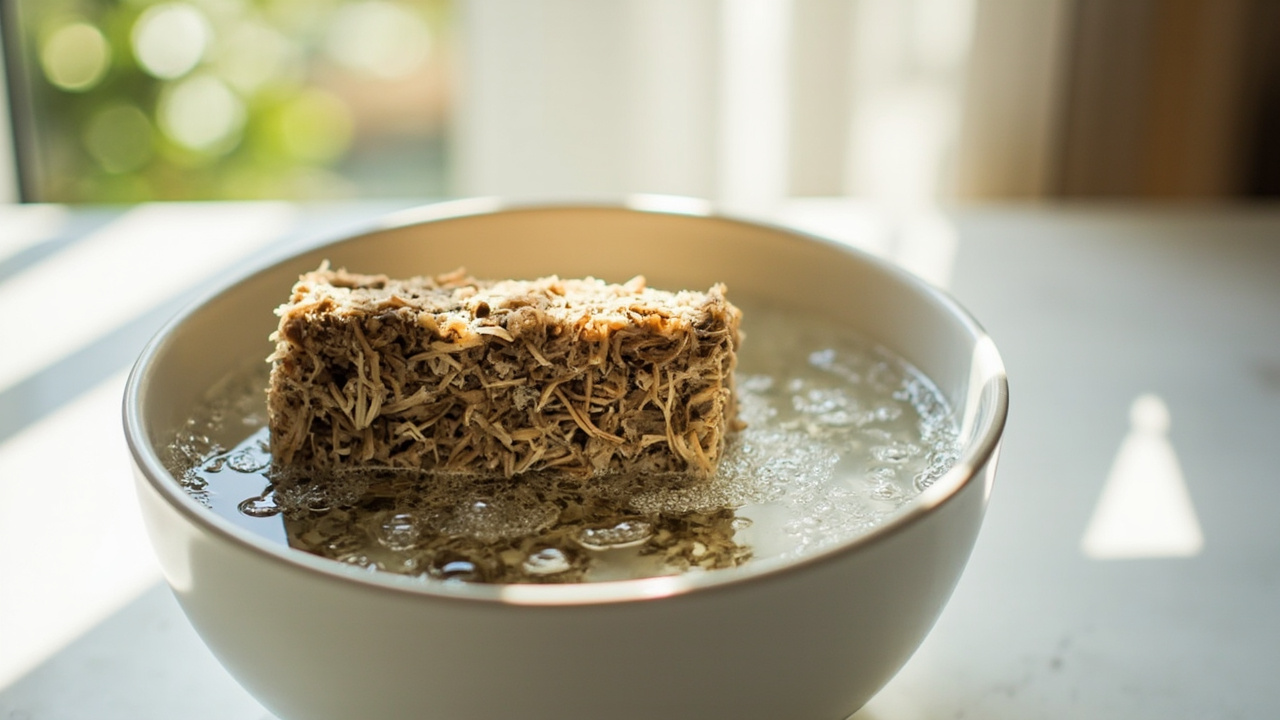
Your first flush is gone, the kit is sitting there tired but not dead, and the question is whether you can coax a second harvest out of it before composting. The answer is yes — with the right soak-and-restart routine, most kitchen gourmet kits give 2-3 flushes before they’re truly spent.
Quick answer
After the first harvest, soak the entire block in cold water for 12-24 hours (or cold-shock shiitake in the refrigerator for 12-24 hours), drain it, return it to the original bag, mist the cut face daily for 7-14 days, and harvest the second flush when pins emerge. Oyster is the most reliable; shiitake needs the cold-shock; lion’s mane is moderate.
Who this is for
One completed gourmet kit harvest — oyster, lion’s mane, shiitake, chestnut, or king oyster — and a desire to get a second harvest before composting the block. This guide is explicitly kitchen-kit-only. For bulk substrate, monotub, or SGFC setups, the workflow is different and out of scope here.
This guide is also explicitly for culinary edible species. For any non-culinary cultivation, this article is not applicable — see community forums instead.
If you haven’t finished a first kit yet, start with Your first grow kit and then come back. The second-flush workflow assumes you’ve already done a clean first harvest and know what your species looks like at full pinning.
What this is / is not
This is a kitchen-kit-only second-flush guide for gourmet edible mushrooms. We focus on the soak-and-restart routine, the species-by-species expectations, and when to stop. This is not a bulk substrate guide, not a monotub guide, and not for any non-culinary species. For any non-culinary cultivation, this article is not applicable.
What this is
- Soak-and-restart for oyster, lion’s mane, shiitake, chestnut, king oyster
- A 5-7 day rehydration window after the first harvest
- Cut face maintenance for 7-14 days until second pinning
- A 2-3 flush realistic expectation for kitchen kits
What this is not
- Bulk substrate management (different workflow)
- Monotub, SGFC, or Martha tent techniques (out of scope)
- A path to cultivation of any non-culinary species
- A way to force a third flush from a depleted block
What you need
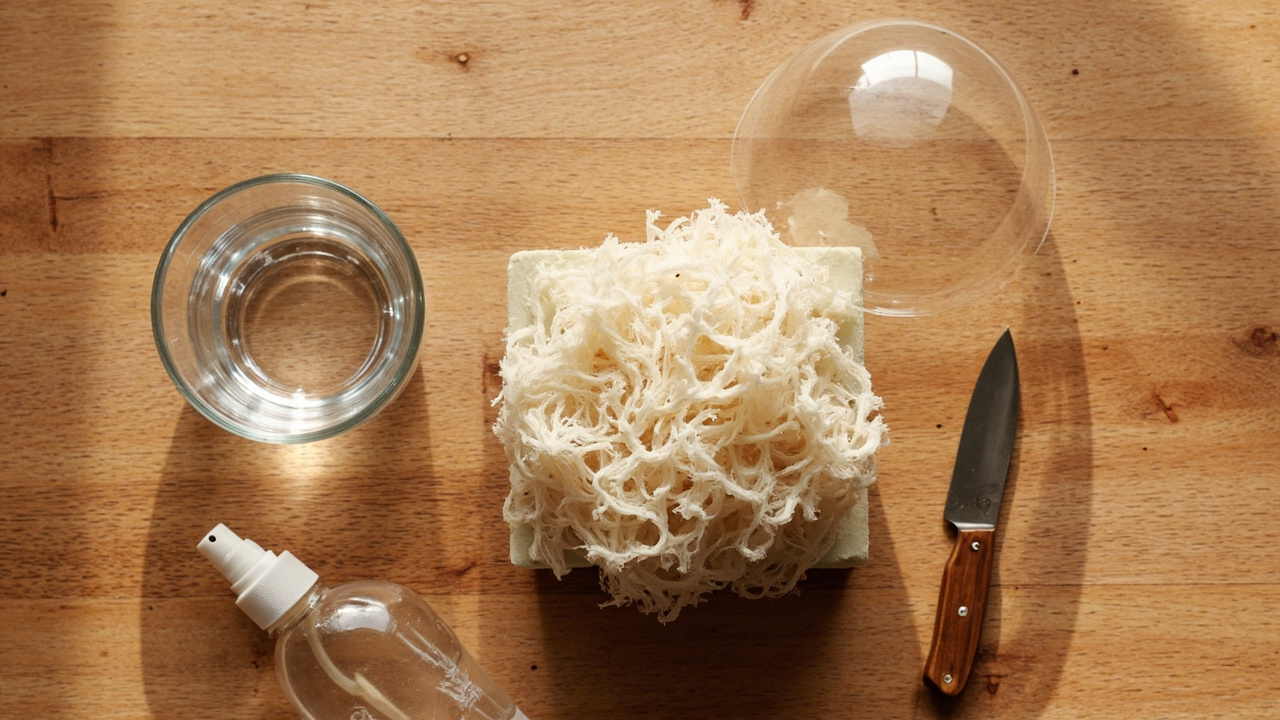
- Original kit block (post-first-harvest)
- Clean bowl or pot big enough to submerge the block
- Cold water (kitchen tap cold + ice cubes if you want fridge-cold)
- Continuous spray bottle for daily misting
- Optional: mini tabletop humidity dome for the rest period
- Mushroom knife with brush for the second cut
A clean kitchen towel and a wire rack are useful for draining the block after the soak. A small kitchen scale (if you have one) helps you track when the block has rehydrated fully — the post-soak weight should be at least 80% of the original starting weight.
Step-by-step
1. Clean the cut face
Brush stray debris and stem butts off the cut face with a soft brush — don’t wash. Trim any remaining stem stubs with a clean folding knife. The goal is a clean surface that will rehydrate evenly without trapping debris. The brush attached to the knife handles the surface cleaning, and the knife handles the stem-stub trim — one tool, two jobs. A small kitchen scale is useful here too — weigh the cleaned block so you know whether the post-soak rehydration hit its target weight.
2. Soak (oyster, lion’s mane, chestnut, king oyster)
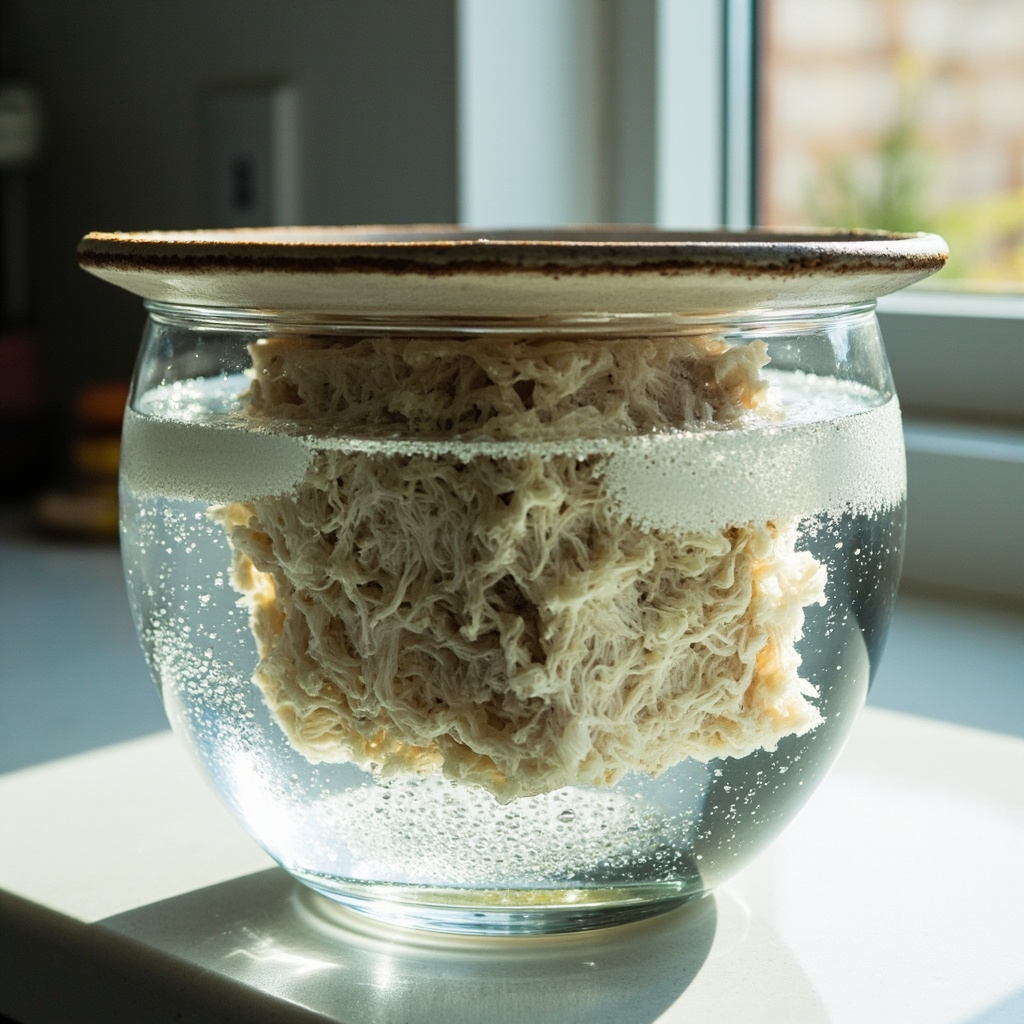
Submerge the entire block in cold water for 12-24 hours. Weigh it down with a clean plate so it stays submerged. The block absorbs water through all surfaces, not just the cut face — this is why a full submersion works better than a partial soak.
For oyster, room-temperature water is fine. For lion’s mane, slightly cooler water (around 60°F) helps trigger pinning. For chestnut and king oyster, room-temperature water works.
After 12-24 hours, lift the block out and let it drain for 5 minutes. The block should feel noticeably heavier than before the soak.
3. Cold-shock (shiitake)
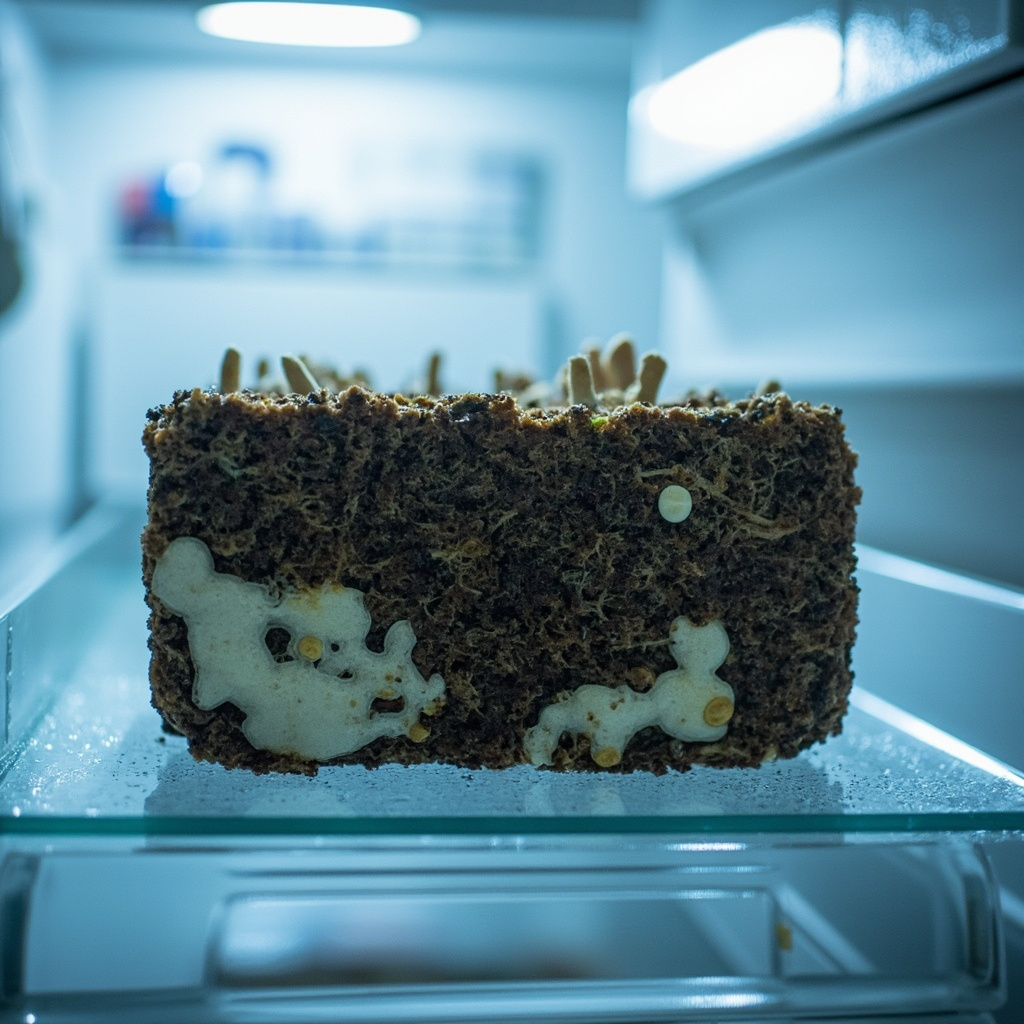
Shiitake is the one species that needs a cold-shock to fruit reliably. Skip the cold-shock and the block may colonize perfectly and never pin. Place the entire block in the refrigerator at 35-40°F for 12-24 hours. The cold drop triggers pinning.
Don’t unwrap the block before the cold-shock — the bag protects the mycelium during the temperature swing. After the cold-shock, drain and return to fruiting conditions.
4. Drain and return to bag
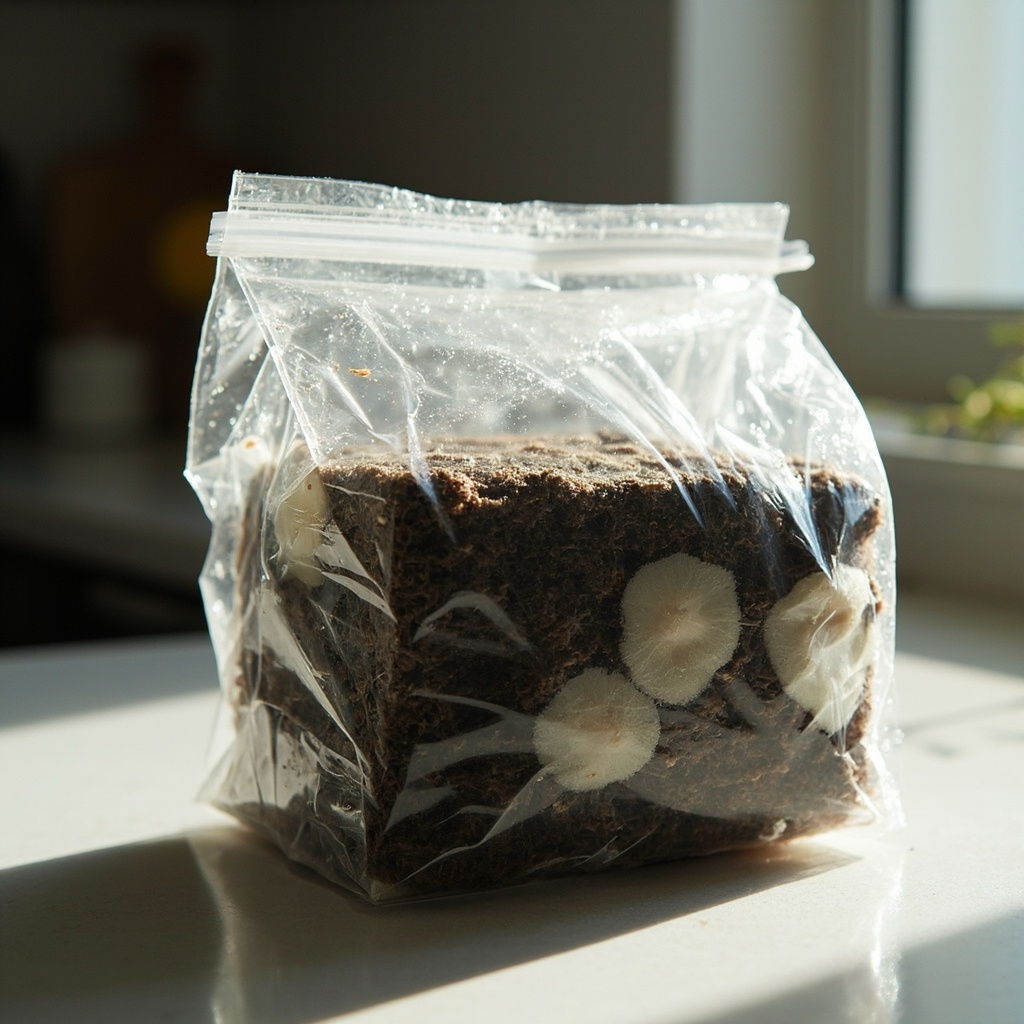
Lift the rehydrated block, drain it for 5 minutes, and place it back in the original kit bag. Fold the top loosely — you want a humidity shell, but the bag still needs to breathe through the existing filter patch. Don’t seal it tightly.
A small dome over the kit during the rest period helps hold humidity without sealing the bag. A mini tabletop humidity dome works well for this — drape it over the kit and lift it once a day for fresh-air exchange. The dome is also useful for any other small kitchen plants that need a humidity boost, so it’s not a single-use purchase.
5. Rest and mist
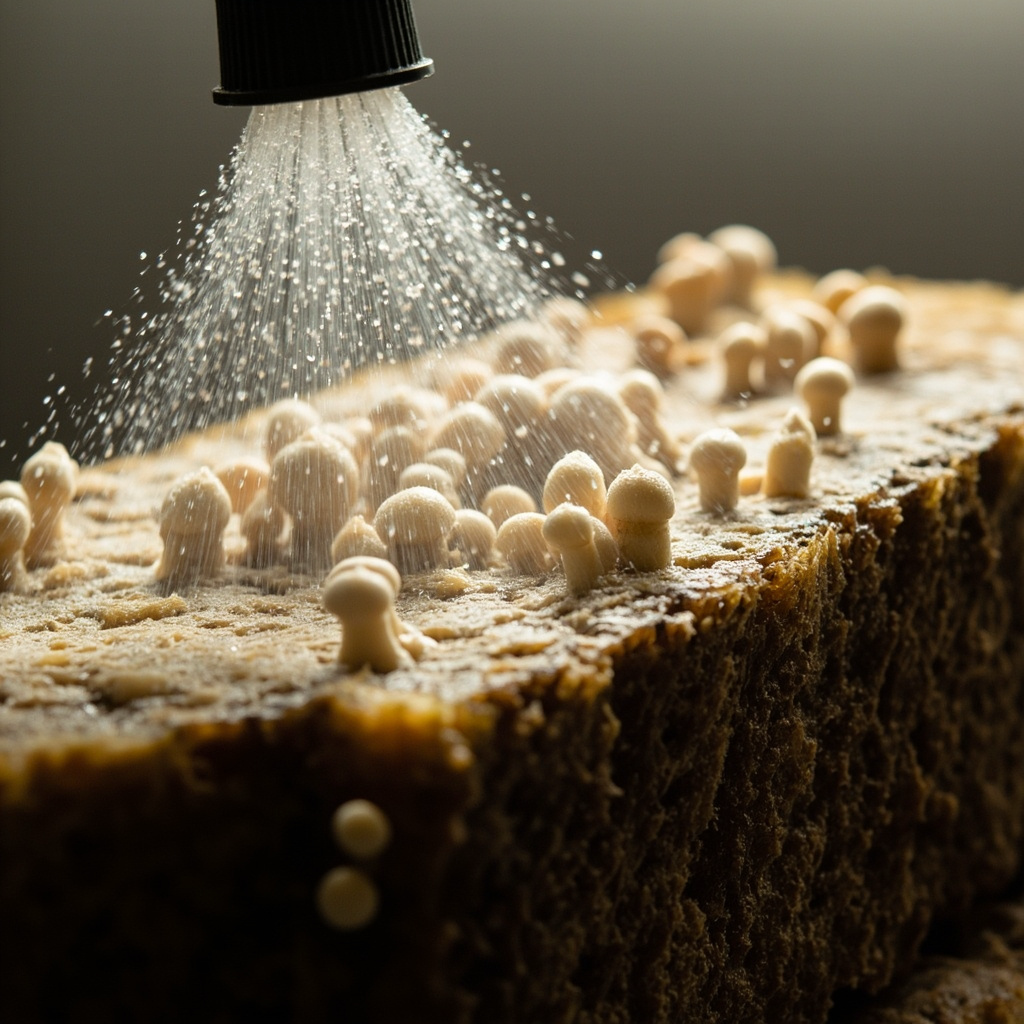
Place the kit at 65-75°F with indirect daylight. Mist the cut face 2-3 times a day with a continuous spray bottle for 7-14 days. The cut face should stay dewy — not dry, not puddled. A 2-pack spray bottle is the right size because one bottle stays at the kit and the other goes in your kitchen drawer for general use.
The first 5-7 days are quiet. The block is rehydrating and recovering. Signs of second-flush activity: small white dots forming on the cut face around the original X, slight browning at the surface, and the block feeling noticeably heavier than before.
6. Harvest the second flush
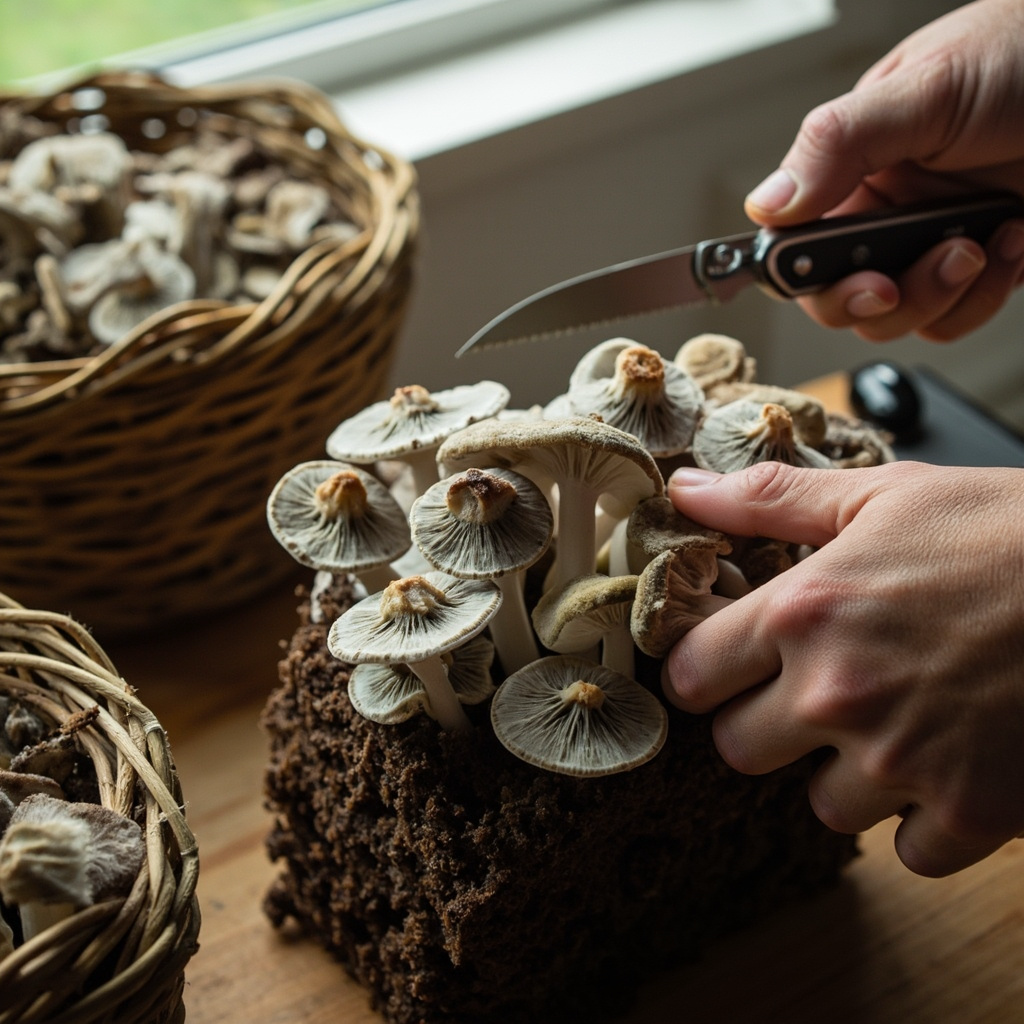
Pins emerge 7-14 days after the soak. Let them grow until the cluster is full but the cap edges haven’t flattened hard or started dropping spores. Cut at the base with a clean knife, twist, and brush — don’t wash.
The second flush is typically 30-80% of the first flush weight, depending on species and how well you rehydrated. Oyster is the most reliable for a near-first-flush second flush; shiitake is usually smaller. Don’t wait for the second flush to be the same size as the first — that almost never happens. A small second flush is still a free harvest.
Species-by-species expectations
- Oyster: Most reliable for 2-3 flushes. Second flush is typically 50-80% of the first. A third flush is often a small bonus.
- Lion’s mane: Usually gives 2 flushes. Second flush is 30-50% of the first. The fruit body is often smaller but the flavor is just as good.
- Shiitake: 1 strong flush, then a smaller 2nd after a cold-shock. Second flush is 30-50% of the first. A third flush israre.
- King oyster: Smaller but reliable second flush; sometimes a third. Often a small surprise bonus.
- Chestnut: Smallest second flush of the five. Many growers compost after the first flush because the second is so small.
Common mistakes
Mistake 1 — Skipping the soak
The single biggest reason second flushes fail is skipping the rehydration soak. A block that just finished a flush is depleted — it has given up most of its water and most of its available carbon. Without a 12-24 hour soak, the block can’t rehydrate enough to support a second pinning. Don’t shortcut this step.
Mistake 2 — Drying out during the rest period
The block is most vulnerable to drying out during the 7-14 day rest period. If the cut face dries between mistings, the pins may abort before they form. Mist 2-3 times a day and consider a humidity dome for the first 5-7 days. A small tabletop dome holds humidity without sealing the bag, which is the right balance for a rehydrating block.
Mistake 3 — Reusing a contaminated block
If the first flush had visible mold (green or black) or persistent sour smell, that block is probably done. Don’t try to soak and reuse a contaminated block — the contamination will spread during the rest period and you’ll lose the second flush anyway. Compost it. Check the contamination overview if you’re unsure whether what you’re seeing is contamination or surface growth.
Mistake 4 — Importing monotub or grow tent techniques
Bulk substrate, monotubs, and Martha tents are a different workflow with different contamination risks. They don’t transfer to kitchen kits. Stick with the soak-and-restart routine — the techniques that work for bulk substrate make second-flush kits worse, not better. For bulk substrate workflows, see grow bags instead.
Mistake 5 — Chasing a spent block
A block that has been rehydrated twice, produced a second flush, and now feels light and dry is done. Don’t try a third soak. Pull the block, compost it, and start fresh on the next kit. Chasing a third flush from a depleted block usually means 2-3 weeks of waiting for nothing.
When to stop
A block is done when it weighs less than half its hydrated starting weight, feels dry and crumbly, develops persistent green or black mold that doesn’t clear with isolation, or stops responding to rehydration after 2-3 attempts. The honest answer is that most kitchen kits give 2 reliable flushes and possibly a small third. After that, the mycelium is exhausted and the bag is full of contamination risk.
Compost the spent block in a garden bed or under shrubs. The remaining mycelium helps the soil microbiome and the decomposed substrate adds carbon back to the soil. A buried block under a tomato plant is a small gift to next year’s harvest. If you’re scaling up after this, see grow kits for the foundation or straw substrate for the next step past kit growing.
A small note on tools: the mushroom knife with brush you used for the second-flush harvest is the same tool you’ll want for every future mushroom harvest. Folding design, belt pouch, and a soft brush for surface cleaning — one tool, one storage spot, years of use. The continuous spray bottle is similarly a one-time buy that lasts through dozens of kits. A small kitchen scale you already own for baking doubles as the post-soak weight-check tool.
If you also picked up a mini tabletop humidity dome for the rest period, it doubles as a propagation dome for kitchen herbs and microgreens — another long-term kitchen tool, not a single-use mushroom purchase.
Key takeaways
- Soak the block 12-24 hours in cold water, then mist daily for 7-14 days
- Shiitake needs 12-24 hours cold-shock in the refrigerator
- Oyster is the most reliable for 2-3 flushes
- Compost when the block is light, dry, or unresponsive to rehydration
- This guide is for kitchen kits only — bulk substrate workflows are different
Species-specific second-flush notes
Oyster is the species most likely to surprise you with a third flush. After the second flush, soak again for 12-24 hours and return to fruiting conditions. A third flush is usually 10-30% of the first — small but worth the wait. If you want to learn more about oyster’s general growing habits, see the oyster species profile.
Lion’s mane rarely gives a third flush. After the second flush, the block is usually spent. Compost it. The lion’s mane species profile covers the first-flush workflow in detail.
Shiitake is the most species-specific second-flush behavior. The cold-shock is non-negotiable — without it, the block often sits through the rest period without pinning. See shiitake growing conditions for the temperature and humidity range.
King oyster is one of the few species that gives a respectable third flush. After the second flush, soak again for 12-24 hours, cold-shock for 12 hours in the fridge, and return to fruiting conditions. The third flush is usually 10-20% of the first. For more on king oyster’s growth habits, see the king oyster species profile.
Culinary / edible kitchen growing only. FungiAtHome does not cover psychedelic or actives cultivation.