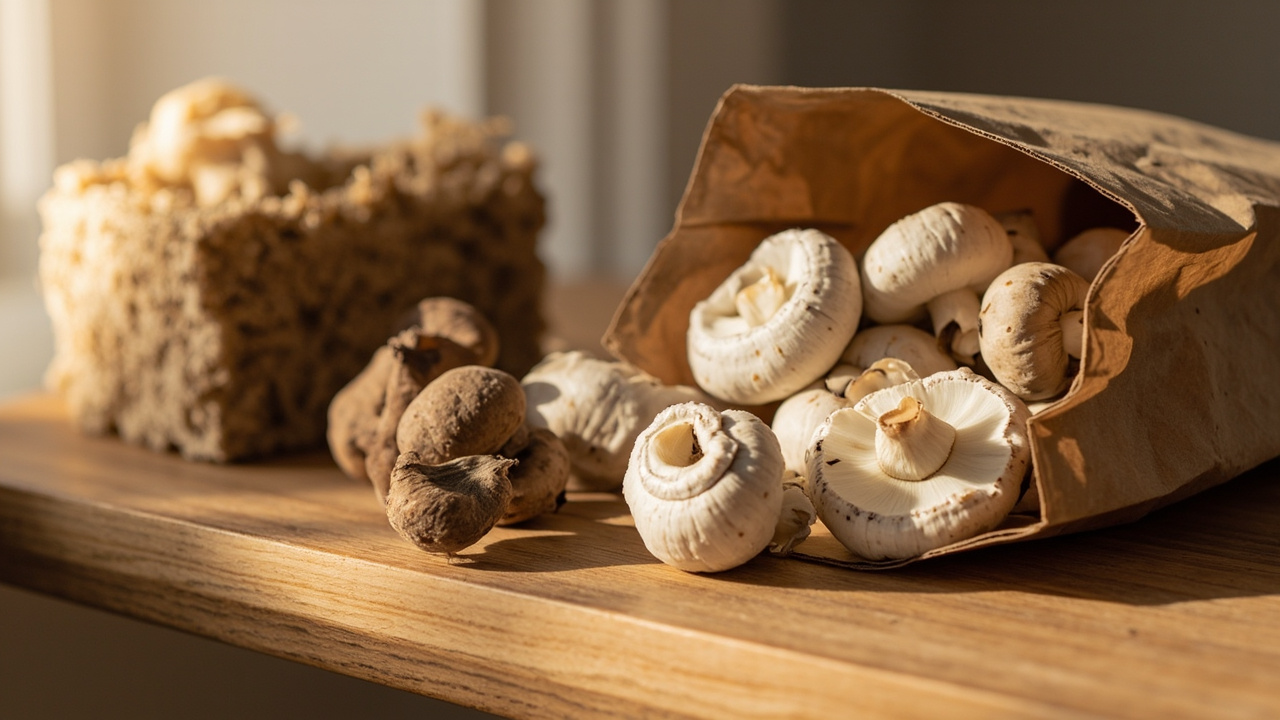
You just pulled a pound of oysters off a kit block and the fridge is already full of last week’s groceries. Gourmet mushrooms are 85 to 95 percent water, which means they’ll go from perfect to slimy faster than almost anything else in your kitchen. What you do in the first two hours off the block decides whether that harvest feeds you for a week or feeds the compost bin tomorrow. Here is the grower’s playbook for keeping a fresh gourmet harvest firm, and knowing exactly when to stop fighting the fridge and pivot to the dehydrator.
Quick answer
Store a gourmet mushroom harvest the day you pick it. For oyster, shiitake, or lion’s mane you’ll eat within a week, a brown paper bag in the main body of the fridge keeps them firm for five to fourteen days. Don’t wash them. Don’t seal them airtight. If the flush is bigger than you can cook fresh, skip the fridge race and move straight to your dehydrator.
What this is — and what it is not
What this is: storing mushrooms you just harvested off a gourmet grow kit — an oyster block, a lion’s mane kit, a shiitake log — before you eat or dry them. Kitchen-scale, a few pounds at most.
What this is not: grocery-store button or cremini storage. That is the lane every food blog already fills, and their advice assumes uniform, dry-packed mushrooms that have already sat in a supply chain for days. Your just-harvested oysters have not. This is also not long-term pantry storage — once they are dehydrated, that is our dried-storage containers page.
Species scope: oyster (including king, pink, and golden), shiitake, and lion’s mane. These are the gourmet edibles home growers actually fruit in a kitchen, and each one behaves differently in the fridge.
Do this first
Before you choose a storage method, do these three things in the first two hours off the block. They buy you days of shelf life that no container can recover later.
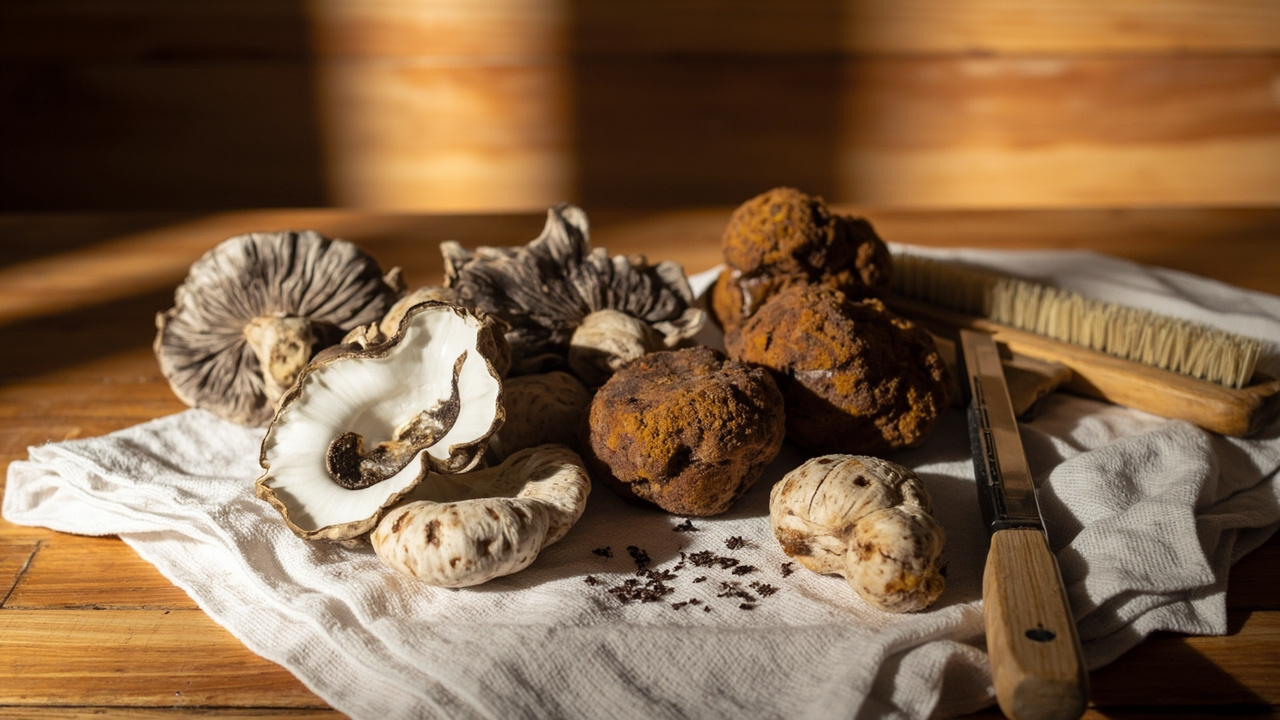
- Pick clean, don’t wash. Brush off substrate crumbs with a dry cloth or soft mushroom brush. Water is the enemy of fresh mushroom storage — it kicks off the slime slide within a day. As GroCycle notes in their storage guide, washing mushrooms before storing them reduces shelf life because they absorb extra moisture during the process. Wash only right before you cook.
- Drop the field heat. Lay the harvest on a clean towel at room temperature for 20 to 30 minutes to vent harvest heat and surface moisture, then fridge. Never seal warm mushrooms in a bag — condensation builds instantly.
- Sort by species and size. Oysters go slime-first, so eat those soonest. Shiitake lasts longest. Lion’s mane bruises, so keep it separate. One slimy cap ruins the whole bag.
Skip these three steps and no paper bag in the world saves a wet, warm, mixed-species pile of oysters.
How long fresh harvests actually last
Fresh shelf life depends heavily on species. Your just-harvested gourmet mushrooms behave nothing like grocery button mushrooms, which get the “up to two weeks” claim in food magazines. The ranges below are practitioner consensus from gourmet retailers and home growers — not from a controlled lab study, so consider them rough guidance rather than guarantees.
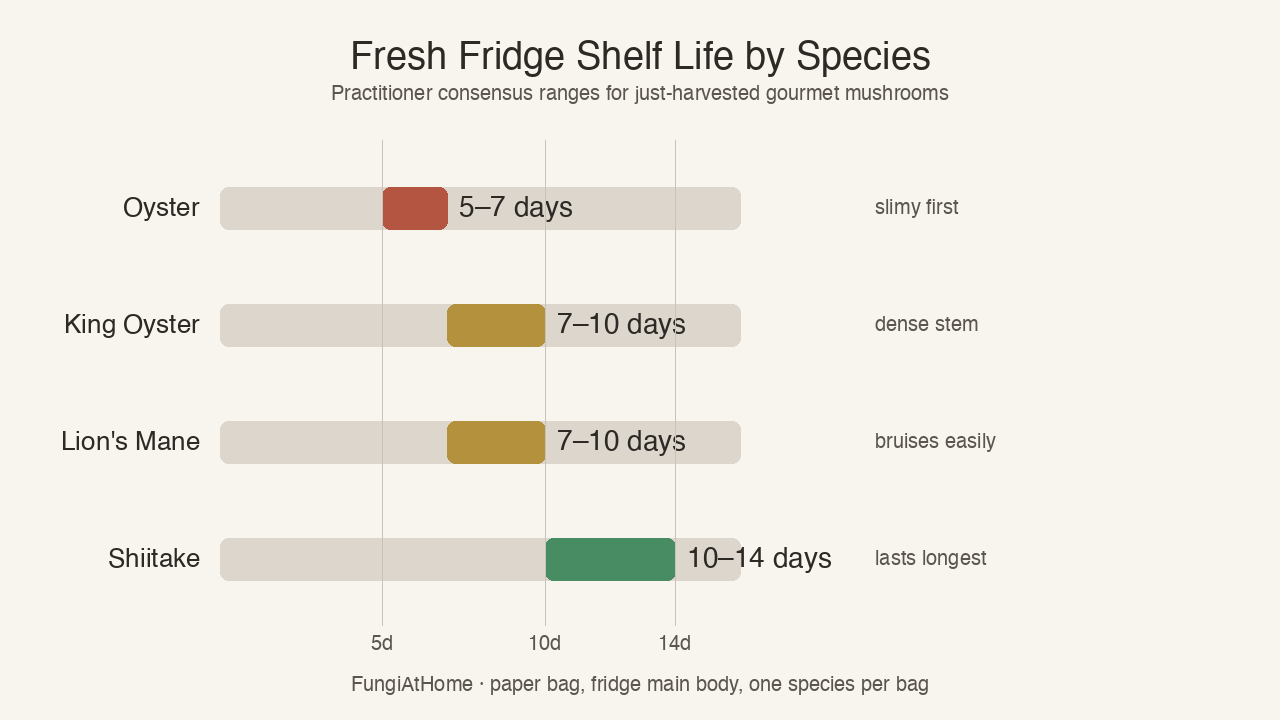
- Oyster (including pink and golden): 5 to 7 days. Slimy edges are the first failure sign.
- King oyster: 7 to 10 days. The dense stem holds up longer than cap types.
- Lion’s mane: 7 to 10 days. Watch for browning or yellowing — it bruises, which does not always mean spoil, but signals use-soon.
- Shiitake: 10 to 14 days. The longest-lasting gourmet; firm caps dry out before they rot.
GroCycle notes that shelf life varies by species, with most mushrooms lasting only 1 to 3 days at room temperature. Refrigeration extends that window considerably — but oysters are the species most likely to go slimy first, so plan your cooking schedule around them. A breathable brown paper bag in the fridge main body is what stretches that window to the ranges above. For more on the oyster growth cycle that produces these flushes, the species page covers timing and yield.
Decision tree — store fresh or pivot to dry?
Read your flush size and your week, then pick a branch. The goal is to match storage method to how fast you will actually cook.
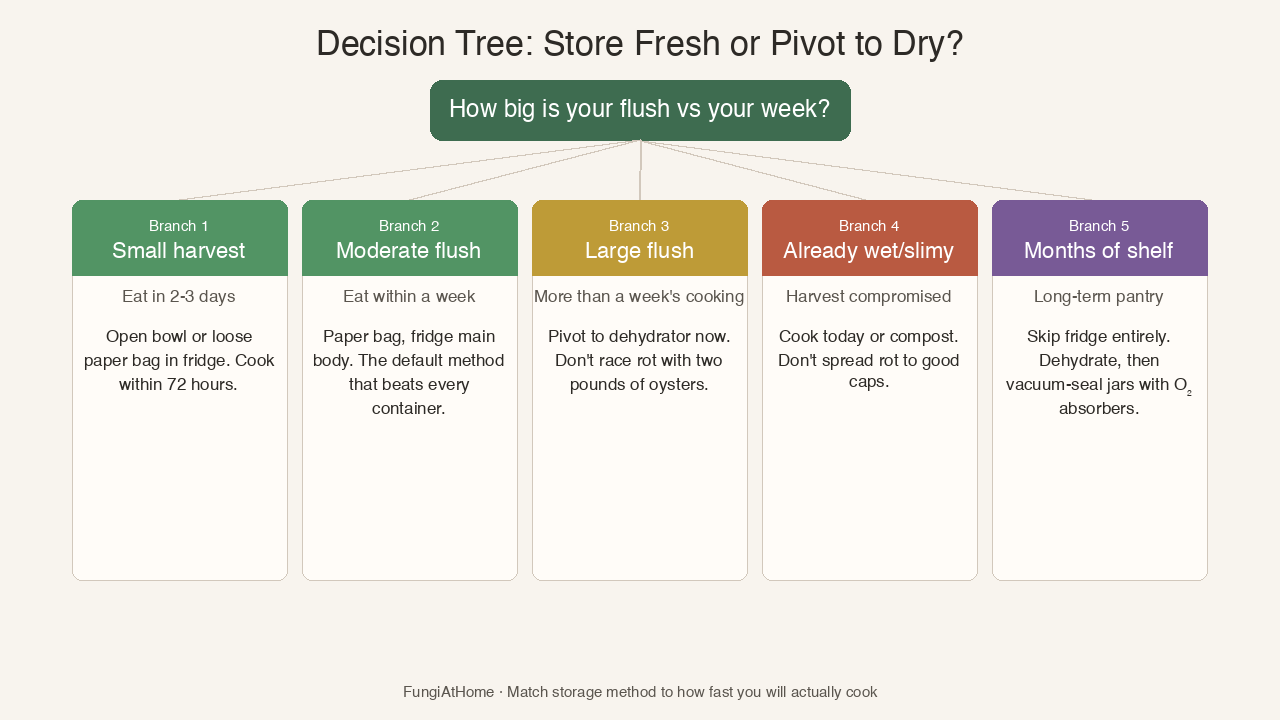
Branch 1: small daily harvest, eat in 2 to 3 days
You picked a handful for tonight’s dinner. Lay them in an open bowl or loose paper bag in the fridge, cook within 72 hours. No special gear needed.
Branch 2: moderate flush, eat within a week
A typical oyster or shiitake flush — half a pound to a pound. Paper bag in the fridge main body is the default. Paper breathes and wicks the moisture that causes slime. This is the method that wins every head-to-head test, from GroCycle to The Kitchn’s six-method comparison. A pack of brown paper lunch bags is all you need.
Branch 3: large flush, more than you can cook fresh
Two pounds of oysters from a big second flush. You’ve got two honest options: gift or eat aggressively for a week via paper-bag fridge, or accept you’ll lose some and pivot to the dehydrator now. Don’t pretend the fridge will hold two pounds of oysters for two weeks — it won’t, and rotting mushrooms will contaminate the whole batch. If you already own a Nesco VS-12 vacuum sealer, use it to portion the cooked harvest for the freezer path.
Branch 4: harvest already wet or slightly slimy
Cook today or tomorrow, top heat. If a cap’s already collapsing or slimy, it’s past storing — use it or compost it. Don’t fridge it and spread the rot to the good ones.
Branch 5: you want long-term pantry shelf — months
Fresh storage isn’t your path. Go straight to dehydrate, then into dried-storage jars with oxygen absorbers in a cool, dark spot. That is the mushroom dehydrator page and the next step in this chain. Fresh is for the week; dried is for the year.
Storage methods — ranked
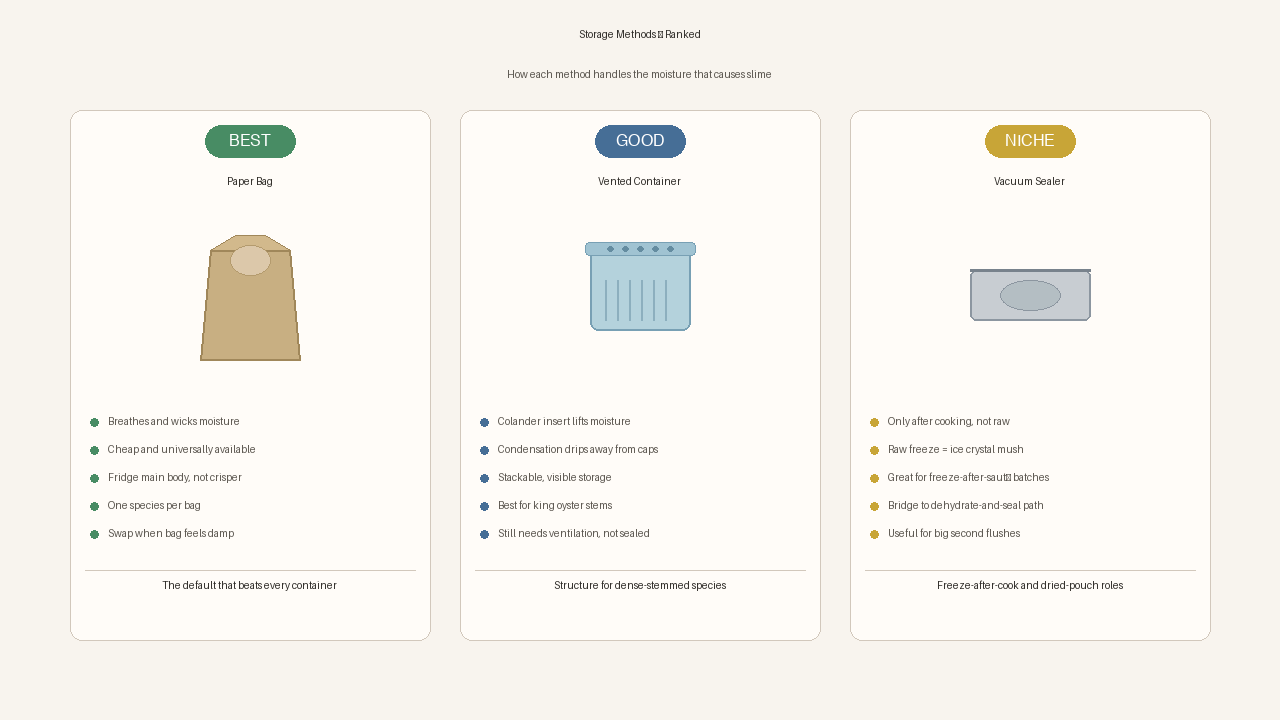
Paper bags — the best default
Brown paper lunch bags breathe and absorb the moisture mushrooms constantly release, which is exactly what stops slime. GroCycle confirms this: breathable packaging that lets excess moisture escape but keeps drafts out is the preferred method. Fold the top, put it in the fridge main body — not the crisper drawer, which is too humid. One species per bag. Swap the bag when it feels damp. The Perfect Stix 4 lb brown bags come in a 50-count pack, which is enough for a season of harvests.
Vented containers with a colander insert
A produce container with a raised drain tray lets condensation drip away from the caps instead of pooling underneath them. This is a good pick for king oyster stems and shiitake caps where you want visibility and a little extra structure. The Freshmage containers with colander inserts give you four sizes with matched drain trays. They still beat a sealed tub — any truly airtight container traps moisture and speeds rot.
Vacuum sealing for the freezer
Fresh mushrooms do not vacuum-seal-and-freeze well raw. Ice crystals rupture the cell walls, and you get mush on thaw. Vacuum sealing earns its place after you have blanched or sauteed the harvest, then frozen — or for the dry-and-store path. The Nesco VS-12 with its 130-watt double pump handles both the freeze-after-cook batches and the dried-pouch long-term shelf. If you only seal occasionally, the MegaWise 80kPa sealer covers the same roles at a lower price point.
What you’ll need
You do not need much. A paper bag does most of the work; the other gear is for the pivot-to-dry path or a big flush.
- Brown paper bags — the single highest-impact item. Cheap, breathable, and the default for Branch 2. The 4 lb fold-top bags are thick enough to hold a full flush without tearing.
- Vented produce container with colander — for king oyster and shiitake where you want drainage and visibility. The Freshmage 4-piece set nests in the fridge and stacks clean.
- Vacuum sealer — for the freeze-after-cook path or batching a large harvest toward the dehydrator. The Nesco VS-12 is the workhorse pick; the MegaWise budget sealer is enough for occasional use.
- Mushroom brush — a purpose-built pig-bristle brush does the dry-clean step without moisture; cheap enough to keep one at the harvest station and one in the kitchen.
Common mistakes
Washing the harvest before storing
Water sits in the gills and kicks off the slime slide within 24 hours. Brush clean with a dry cloth. Wash only right before you cook. This is the number-one reason a “perfectly stored” bag of oysters still goes bad — the grower rinsed them at harvest and sealed the moisture in.
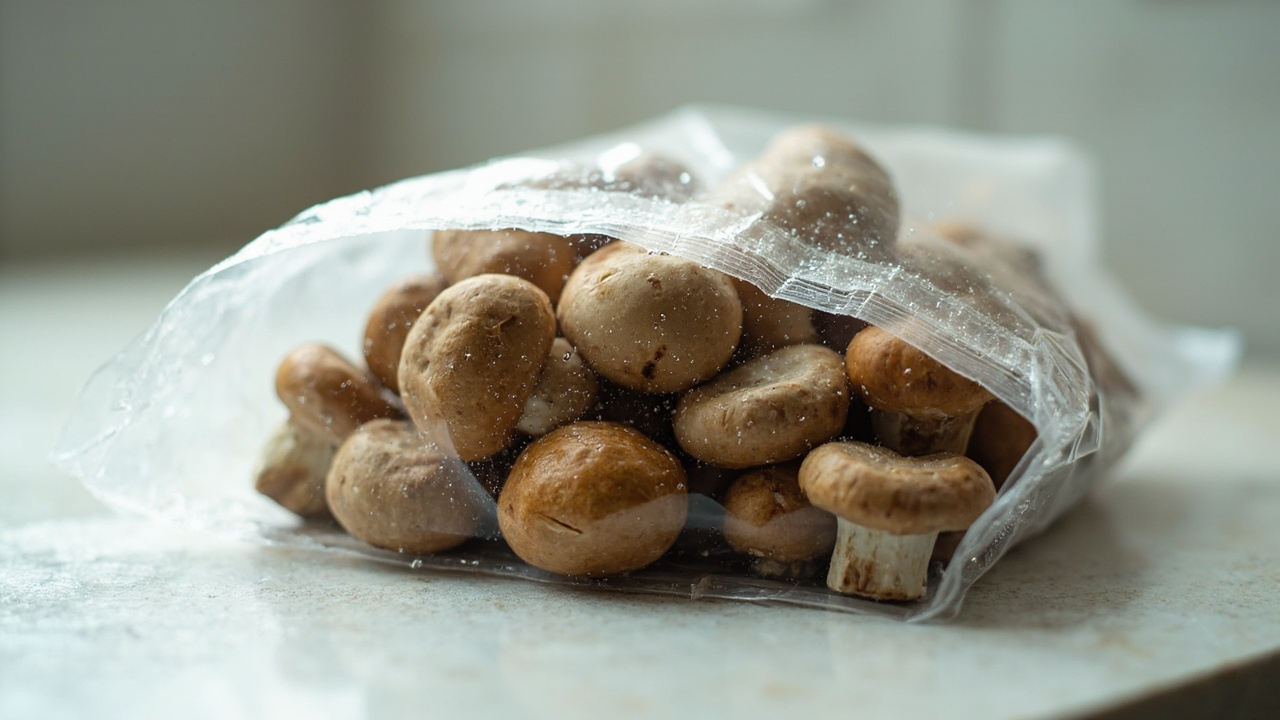
Sealing fresh mushrooms airtight
A zip-top bag or sealed tub traps the moisture mushrooms constantly respire. Within two days you have built a humidity chamber. Paper breathes. That is the whole point. If you are reaching for a sealed container, make sure it has a vented lid or colander insert.
Mixing species and sizes in one bag
One slimy oyster cap will take down a whole bag of good shiitake. Sort by species at harvest time, one bag each, and eat the short-shelf-life oysters first. The shiitake you picked today could last two weeks — but not if it is sharing a bag with a sliming oyster.
When fresh storage fails — four exit signs
If you see any of these, stop storing and act. Cook, dry, or compost — do not keep fridge-racing a losing batch.
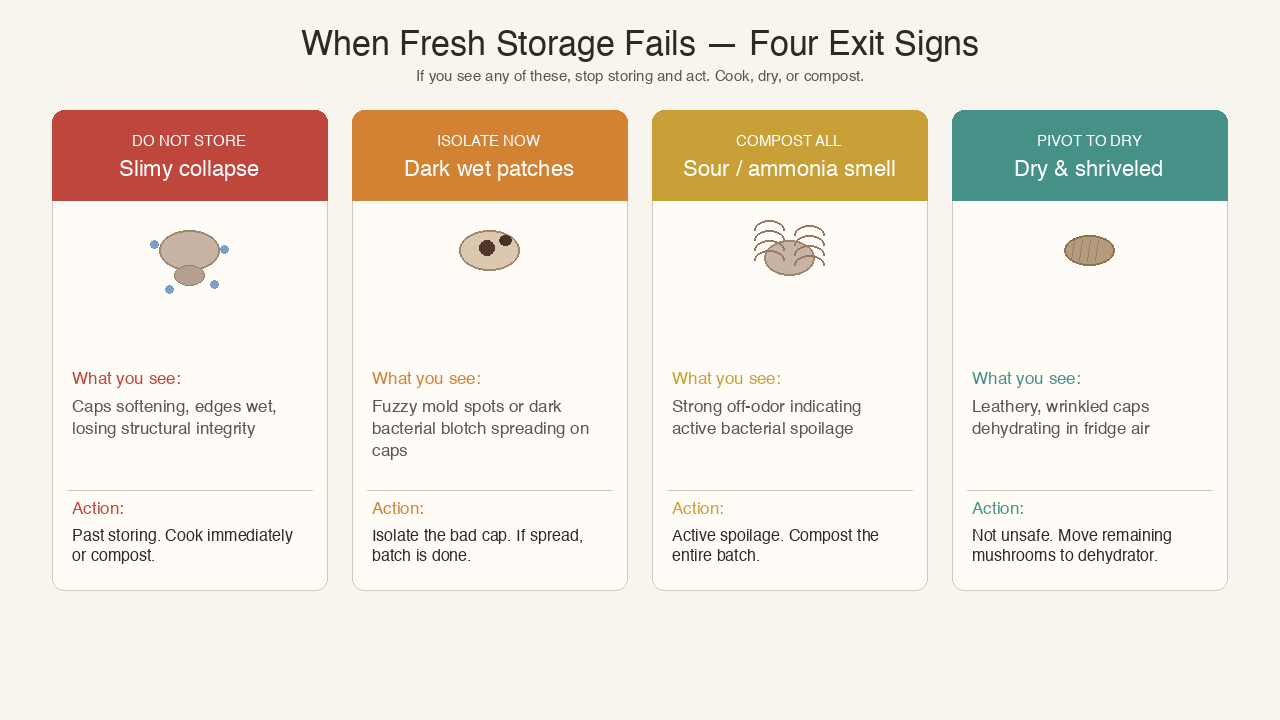
- Slimy or wet collapse — past storing. Cook now or compost. Do not spread it to the good caps.
- Dark wet patches or fuzzy mold — likely bacterial blotch or a mold. Isolate the bad cap. If it has spread, the batch is done.
- Strong ammonia or sour smell — active spoilage. Compost the lot.
- Dry, shriveled, leathery — not unsafe, just dehydrating in the fridge. This is your signal that fridge storage has run its course. Move the rest to your dehydrator on purpose.
If the problem showed up on the block before harvest, check whether your fruiting chamber conditions are the root cause — cleaner, drier harvests store longer from the start. A budget vacuum sealer is also handy at this stage for portioning whatever you rescue into cooked-frozen batches.
Related
- Mushroom Dehydrator for Gourmet Harvests — the long-term path when fresh storage is not enough.
- Dried Mushroom Storage Containers — jars, vacuum pouches, and oxygen absorbers for the dehydrated shelf.
- How to Get a Second Flush — a big second flush is usually what overwhelms your fridge. Plan storage before it fruits.
- Oyster, Lion’s Mane, Shiitake — species-specific harvest timing and yield.
- Fruiting Chamber for Gourmet Kits — better fruiting conditions mean cleaner, drier harvests that store longer.
- How to Choose a Grow Kit — start here if you have not harvested yet.
Key takeaways
- Store a gourmet harvest the day you pick it — the first two hours decide the next two weeks.
- Paper bag, fridge main body, one species per bag is the default that beats every fancy container.
- Shelf life is species-specific: oyster 5 to 7 days, lion’s mane 7 to 10 days, shiitake 10 to 14 days.
- Never wash before storing, never seal airtight, never mix species in one bag.
- When the flush is bigger than a week’s cooking, pivot to the dehydrator — do not lose a race with rot.